
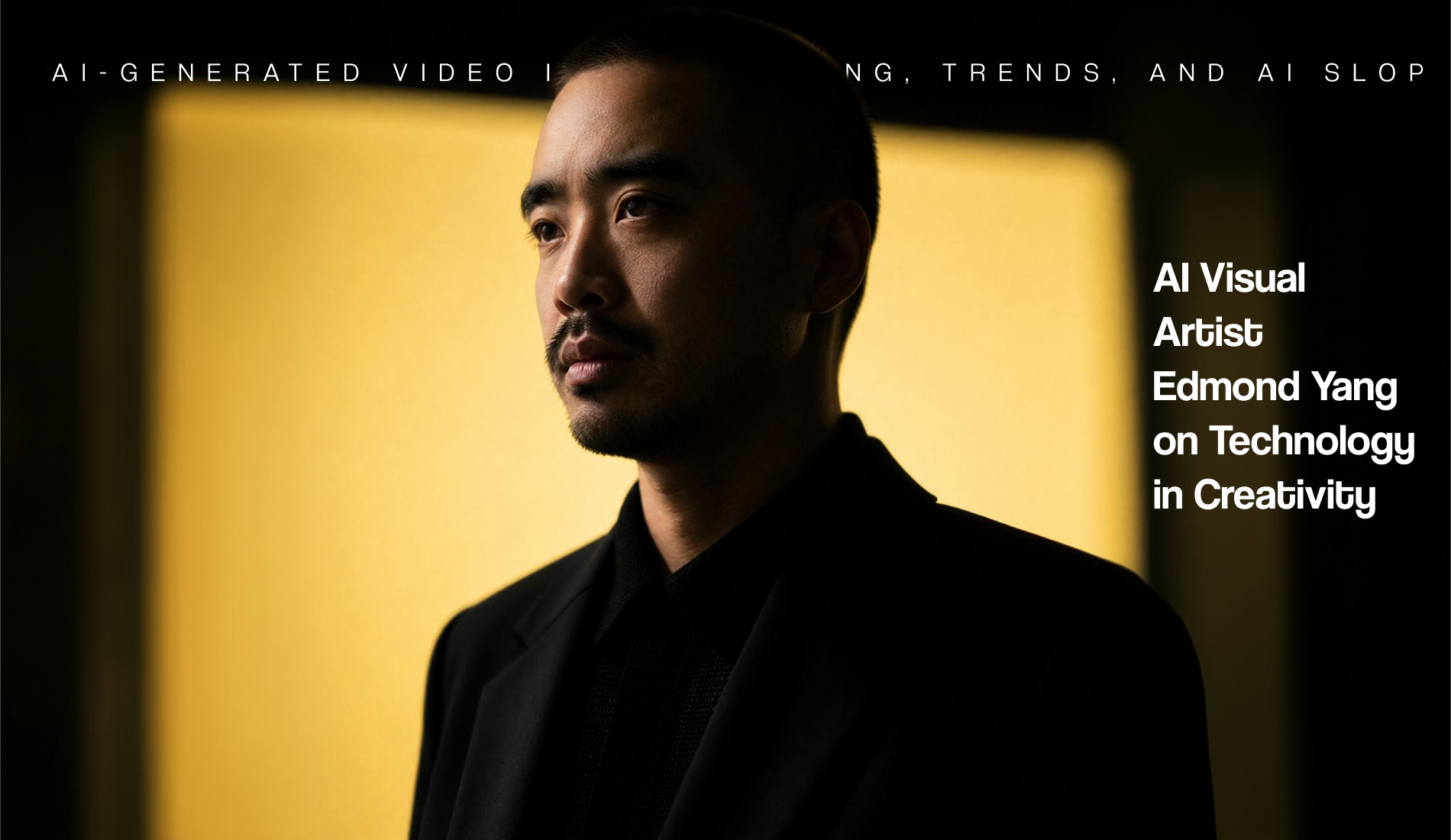
Edmond Yang, an Oslo-based AI visual artist, entrepreneur and speaker, has an impressive ability to combine successful business ventures with outstanding creative achievements. His AI-generated videos are far from what is commonly referred to as AI slop. Beyond their high production quality, they explore a wide range of subjects, from entertainment to socially and politically charged topics, including current affairs. Edmond is an award-winning interdisciplinary AI visual artist whose work has been gaining widespread attention across the internet. One notable example is his widely discussed video featuring Justin Timberlake, which was covered by Daily Mail and MARCA. He also produces advertising videos in collaboration with major companies, and recently led practical AI workshops for creative professionals in Astana as part of the Creative Shift event. ER10 Media spoke with Edmond to learn more about his journey, AI-generated videos, and the advertising industry.
The Birth of Stories
— So, we can start. The first question is about your story. Could you please tell us more about your background and how you came to AI?
— I have 25 years of experience in advertising and design. My background is in graphic design and advertising, and I’ve done a lot of commercial work, always as a freelancer: as an art director, a designer and also a photographer. So I’ve worked in many different fields, and the common thread I love working with is technology, storytelling and visual communication. Everything that blends in that space interests me.
I’ve always tried to automate things and build systems. I look for ways to do things quicker and more efficiently, while keeping the quality and the experience for my clients and for myself. I’ve also been interested in building companies, and I’ve had several startups in Norway and in China. I was born and raised in Norway, but my parents are from Hong Kong, China, so that’s where my roots are. Having both cultural backgrounds gave me many opportunities to explore businesses in different cultures, and I’m always thinking about how one can help the other, whether through import and export or in other ways.
For example, I’ve been exporting fish oil to China for five or six years, and this year I’m launching new products. I also co-own a cocktail bar in Oslo, and I’m a co-partner in a döner kebab franchise in Norway. I’ve just launched a new soap brand: soap sheets that dissolve in water. But ultimately everything comes down to how I can use AI, and technology in general, to create a better experience for my clients and customers.
I’ve also worked as a photographer: I’ve done a lot of photo shoots and held my own exhibitions in both Norway and China. I also owned a modeling agency for a few years. I bought one, but it was a bit premature for Norway: it was really early, before influencers and social media. We also owned a digital agency called Oslo Digital, which we ran until 2023. At its peak we had 11 employees. I was a co-founder and creative director, and we did everything from VR and AR to video production, strategy, e-commerce websites and more. So my background is also very much in digital production.
After 2023, I was fed up with all the management at the agency, so I started again as a freelancer and consultant. That coincided with the rise of AI and ChatGPT. I had also been involved with different AI generation platforms before it came out. I saw early on that AI was heading in a direction that would be very useful for filmmakers and designers. So I got into this space quite early, saw how much AI could help me in my daily work, and just kept going. Now I work with AI full-time, every day.
— Very impressive. I’d like to ask: how are you able to manage all these different areas and businesses? What qualities help you?
— For me, it’s about having good partners, because I’m not involved in the daily operations; I’m mostly on the board. Even though I co-own a cocktail bar, for example, my partners run it, because I’m not a bartender or an operational owner. I help with the big strategies, marketing materials and so on. It’s important to know your own limitations regarding time and everything else, so I contribute what I can. And, as you mentioned, time management is also quite important.
— How exactly do you manage your time? Could you share some techniques?
— I have my own AI agents running 24/7. They help me a lot by sorting my emails and meetings and by researching ahead of meetings, so I can focus on the matters that are more important. It’s also about not taking on too much work and not saying yes to everything. I was a yes-man for a long, long time because I didn’t want to miss any opportunities, but lately I’ve been able to choose the right projects and opportunities that come my way.
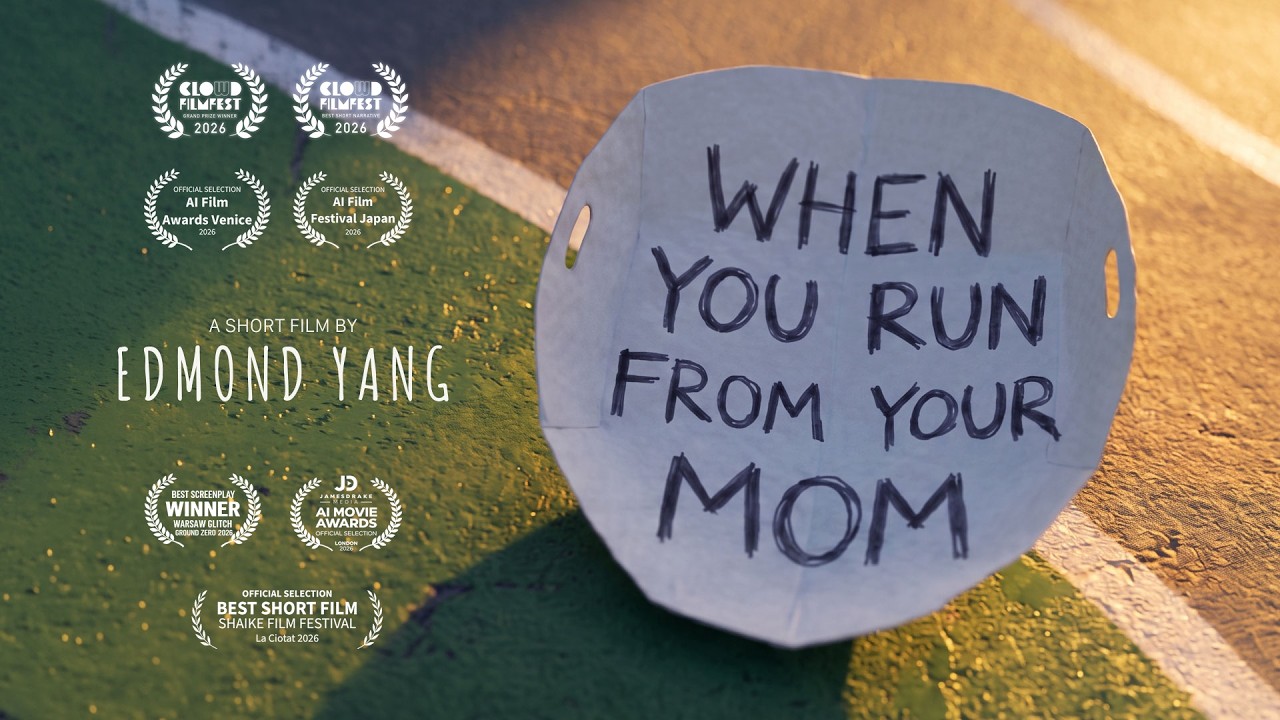
— Fine. You mentioned that quality is very important to you, and I was impressed by the quality of your AI cartoons and videos, because we often see bloopers in AI content. How do you keep the quality so high in every second of the video, when AI can be tricky?
— The key is to spend time perfecting every frame first, and then use AI to animate it. Back then it was more difficult, because the technology wasn’t developed yet and the quality wasn’t there. Nowadays it’s really good. As long as you have a solid base of graphic assets and elements, it’s still not easy, but it’s much easier to create consistent animation, live action and ads.
But ultimately you need a good story, of course, and maybe some experience as a director. I don’t consider myself a filmmaker or film director, because I believe you need to have your own distinct vision to be one, and I’m not there yet. I’m not sure I want to be, either. But of course I have stories I want to tell, and I’d love to collaborate with other directors and help them tell theirs. For me, the technical part is what you need to know, including the limitations of AI. It’s not about fighting against it, but about using AI as a creative partner.
Behind the scenes
— Which AI tools exactly do you use to create all of this?
— At the moment I’m using Seedance from ByteDance. Seedance 2.5 is one of the leading video models right now. But I also see many open-source models improving very rapidly, in both quality and efficiency, so in six to ten months you may be able to run top-quality models on your own computer. Besides Seedance, I use various image models, such as Google’s Nano Banana, which everybody uses, or ChatGPT’s own image model. There’s also Midjourney, which is more stylistic. Again, it depends on what kind of result you want, so you choose the best model for each case. I’m model-agnostic: I don’t want to limit myself to one, but to find the best workflow.
— Nice. Could you give a step-by-step guide for people who want to learn to create such videos? What do they need?
— At this point you can create videos even with your phone or an iPad. You don’t need any expensive equipment. Of course, for more comfortable editing, you’d want at least an iPad, a laptop or a PC. Nowadays it’s so easy that everybody can make very nice content, films and products, but people often lack an understanding of visual storytelling and communication. That’s natural, because everybody can do it now, so we see a lot of what you might call “slop”.
But if you’re really interested in visual storytelling, my advice is to learn the traditional side too. I try to educate myself in traditional filmmaking. There are many basic rules that have been established over the years: composition in photography, for instance, and how different compositions affect the narrative. It’s important to understand why you use different angles, compositions or crops to tell your story in the best way.
So I recommend both: the AI technology and the technical side of using it, but also the traditional side: photography, storytelling, cinematography, everything around filmmaking. Editing too, because all of these are separate crafts, and I’d love to work with good traditional editors and other filmmakers to see how I can apply my expertise to their craft and collaborate.
— Isn’t it a problem that some people create videos without understanding storytelling nuances and other basics? They just generate lots and lots of videos and clog the Internet?
— I think it’s a stage we’re going through, and we go through it as individuals, too. I also made a lot of short videos and AI face swaps back in the day, when I went viral with a couple of hundred million views. We chased those numbers and pumped out all sorts of content that may or may not have been good storytelling: funny stuff, or shocking content, for that matter.
Since it’s so easy now and getting cheaper all the time, there will simply be more of it. Still, it’s something people grow out of. From my own experience, I got bored of making these short videos, so I started making videos that have some kind of value or aesthetic, something that can build my profile. There will always be people who use these tools in their own way, and it’s basically impossible to prevent that.
— But it already influences big corporations such as Netflix. Netflix announced that it wants to produce short vertical videos, and people already can’t stand a two-hour film without doomscrolling or anything else. Even classic cartoons have become much faster and more colorful. Isn’t it all about dopamine, which is not very good for the brain?
— I’m convinced, though I don’t know how or when, that this is also a stage that will pass, because the more we’re exposed to one thing, the more the opposite trend emerges. I see that many young people are getting very tired of this kind of content, or more aware of it. And they will be the ones to dictate the course of production in the future. Many young people today are staying away from alcohol, consuming less and spending more time outdoors. I hope that also means less screen time, because the more content we consume, the more bored we become and the more we chase dopamine. At some point it all flips around.
You can see it in booming industries like outdoor activities, festivals, music concerts and women’s football: things you experience together, in a stadium or at a concert. That can’t be replicated in front of your screen, at least not until technology can connect directly to our brains, and that is probably more than a decade away from becoming mainstream. I hope this trend continues. But of course, the people at the top of Netflix want to cater to what’s trending right now, and right now it’s phones: everybody has one.
There’s another reason, too: movies from the 90s or the 2000s are darker and less colorful, because they were made for cinemas and TV screens. On a phone, a dark image is a problem, because not everybody has their screen brightness turned up. That’s one reason why content is much more colorful now: less moody and less cinematic. Producers need to cater to the devices people use. In Southeast Asia, India and the Philippines, for example, many people skipped laptops and went straight to mobile phones, so to serve those markets, producers basically have to do this. It is what it is. I hope the trend passes and a new one comes along. I’m not sure if I answered your question.
Marketing tricks
— You did, thanks! And how do you think AI is currently affecting marketing, PR and branding? There’s a trend that already in cinema people sometimes hire AI actresses instead of real ones. What trend do you see in marketing exactly?
— First of all, I have another company called Actorsy, a marketplace where you can license the faces of real people for AI productions. So we’re already serving that industry. I’m sure you still need a lot of human touch in movies and advertising, because non-existent people won’t resonate with consumers. Brands, of course, want to spend less on production. Because customer acquisition costs are so high now, they need to spend more on advertising and less on production. I’ve talked to many brands, and it’s the same everywhere: they’re looking for ways to cut production costs, and AI is one of the tools they want to use.
But my personal opinion is that if I were a brand, I’d never use an AI-generated person who is nobody. I’d go to a platform like ours and license a real face, so that a real person gets paid for the job. There are also many new laws and rules in the EU and in Norway. First of all, you need to label AI-generated content. I think a rule may also come that bans non-existent, AI-generated people from appearing in ads that promote a product. We need rules like that, so that companies don’t misuse these tools just to sell more while spending less on each ad. Governments should definitely enforce that.
— Not every country has AI rules yet. What mistakes do you see in AI advertising? For example, I saw an ad where AI-generated people looked like AI. They talked about their human experience, how they became more successful. And it looked fake.
— That’s definitely a big mistake. I don’t think consumers like it, and it will probably drive sales down rather than up. You also get a less favorable brand impression. There are tons of examples of brands using AI-generated films or ads. But ultimately you need to know what kind of brand you are and who your audience is. If those brands had researched their audience properly, they would have found that almost nobody wants fake AI-generated people selling them a product. So decision makers need to research how using AI people or AI films can affect their brand first, then decide how much money and resources to put into those projects.
— Could you give an example from your advertising work: how did you work with a brand? How did the numbers change, for instance consumer reactions? And how did you approach understanding your client?
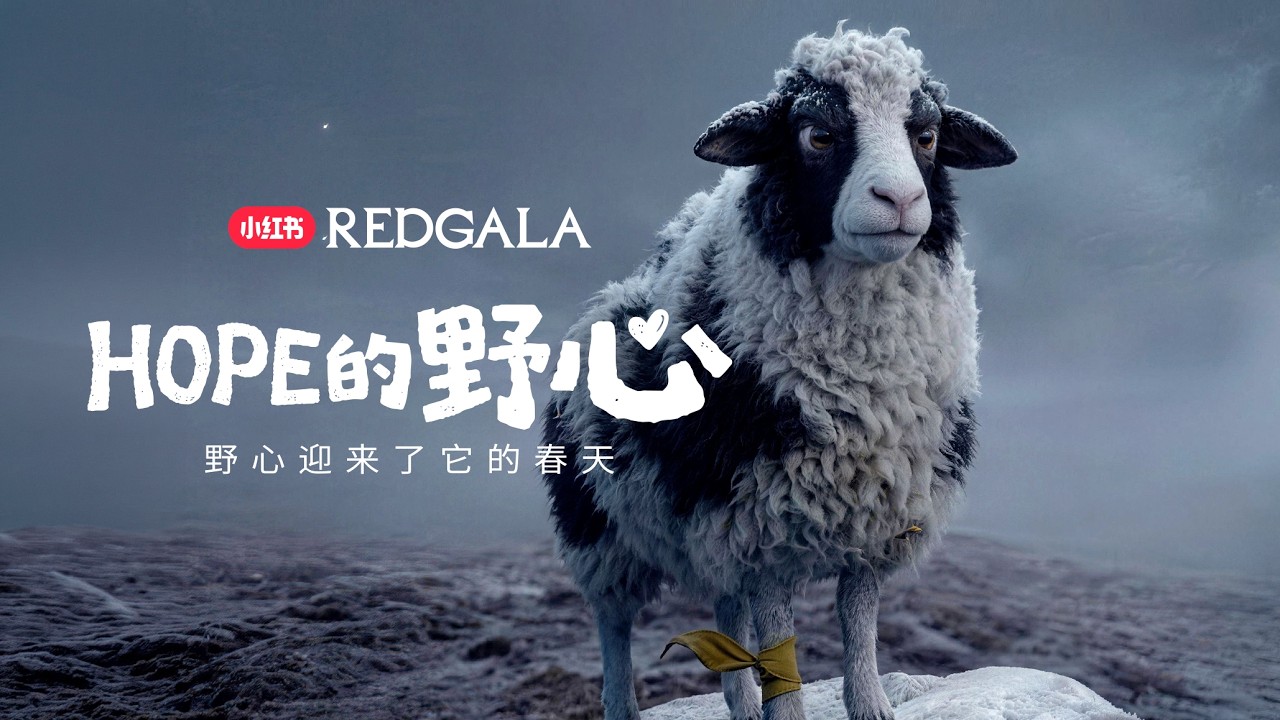
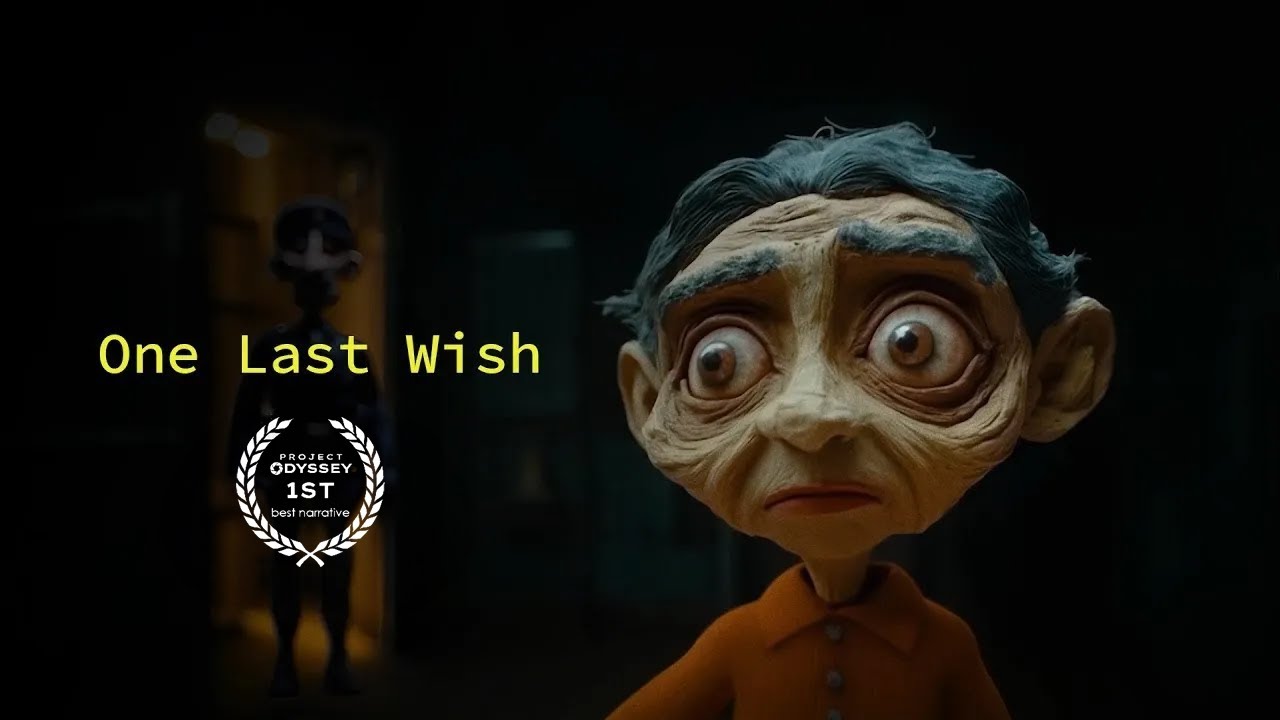
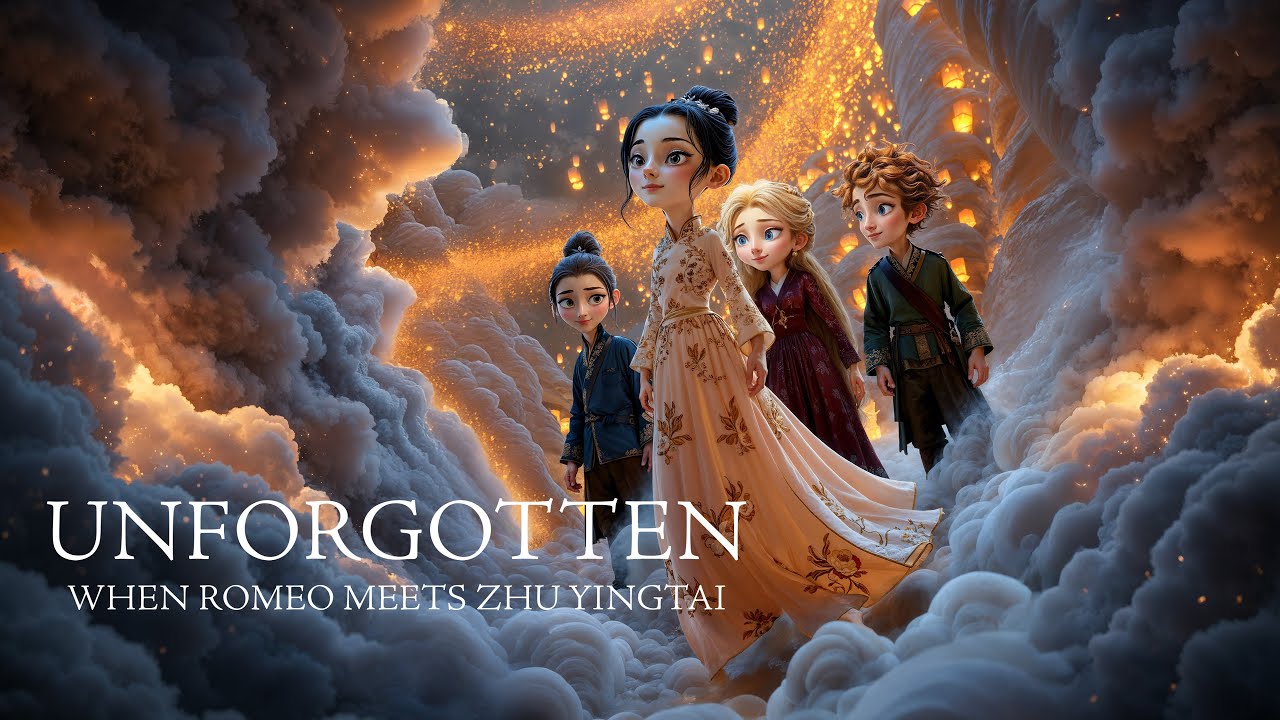
— In my personal projects, as you can see, I’m more into animation now, because I saw early on that AI-generated humans don’t look good, and even today it’s still very hard to make them truly natural and realistic. So I’ve avoided that for a long time. With clients, it depends on their ambitions. As a service provider, you need to set ambitions and limits right at the start, so the client doesn’t mistake AI for magic where everything is possible. Even though it’s much easier now, it’s still a lot of work. So we set expectations from the beginning and walk the client through everything: from concept to style frames, storyboards and, of course, the script.
It’s really hard to estimate a budget when you don’t know how much time things will take. Personally, I quote a fixed price with a percentage buffer on top, and I communicate that buffer to the client at the outset, so they know what to expect. Good communication is essential, because most clients only know AI from what they see in the media: TikTok videos, Instagram Reels, clickbait and the like. So on a real-world project, it’s super important to communicate properly.
— But can we say that brands and big companies are really ready to use AI in their commercials?
— Yes, absolutely, depending on the kind of use. For example, you can shoot a hybrid: live action with AI-generated effects on top, like an explosion or a fire. Effects like that bring the budget down drastically. Another case is 3D-style animation, which is really within reach now, because AI makes it easier and faster. I think AI is already part of many productions, because it drives production costs way down.
— You mentioned that when you create real people with AI, they look hyper-realistic, which, paradoxically, is not realistic for people. How does that affect consumer trust? Do consumers actually trust AI commercials?
— I think “trust in commercials” is very generic. It depends on the context. Say you’re an insurance company showing a family having a nice dinner after buying your insurance. They’re actors, right? They’re not real customers. Should you trust the insurance company then? So it’s already there. It’s the same with any celebrity endorsement: the person in the ad is paid to be there, and we all know that.
Of course, it’s worse when an ad says “this person has saved this much money, and his name is so-and-so”, and the person doesn’t exist, or is AI-generated. Whether you hire an actor or use an AI-generated person, you’re misleading consumers into thinking that this person actually bought your product. I don’t think that’s right at all.
Back to your question: whether to trust AI commercials is a broad question, because you can use AI just for retouching or for cleaning up part of a video. There are so many nuances. What actually counts as an AI ad? I believe that within a year or two we won’t talk about “AI or not” anymore. It will just be film, just ads, absorbed into the market just like computer-generated graphics. We don’t talk about those anymore.
Fifty years ago, when a new car commercial was launched in Norway in the summer, it had to be produced in the winter, three or four months earlier. So they had to fly the car and the whole crew to Spain or Greece, or another warmer country, to shoot it, because 3D animation wasn’t good enough yet. Later, when 3D animation arrived, all of this could be done on a computer, and nobody made a fuss about it. Now you don’t even need 3D animation, because AI is even faster and more cost-effective. AI will follow the same path. In a few years nobody will talk about AI anymore. It’s just a technology, a tool that lets me produce things I couldn’t produce before.